Category: Reflection

  • FOUR FOR THE ROAD

    FOUR FOR THE ROAD

    Fr. Ramon Fruto, CSsR

    This is a reflection of Fr. Ramon Fruto, CSsR – He is currently based in Iloilo City and the Director of St. Clements’ Retreat House.

    Recall your ‘shrines’” was an exercise given us in a joint seminar on “elderhood” for us who belong to the senior and the golden age generations. To the outsider, this opening sentence at once asks for enlightenment. What is “elderhood” and what are the “shrines” we are asked to identify?

    “Elderhood” seems to be a more compassionate and sensitive way of saying “growing old, the same way that we are now asked to call “suspects” as “persons of interest”! Growing old used to be taken for granted and even with a sense of pride and mission accomplished. Growing old gracefully was a lesson all those who have crossed the 60-year line were expected to learn. But with today’s sensitiveness to cultures and subcultures, “growing old” is something that the “ageing” wish to varnish over the way we ageing males try to comb our hair so as to hide the balding patches of our pate and the ageing females undergo a “Dr. Belo” on their wrinkling cheeks. And so in the retreat-seminar for us ageing Redemptorists, we are asked to reflect on our answer to the reflection-question: What do you consider as your great challenge in growing into being elderly/”Elderhood”?  That is certainly a sensitive way of asking a question that could be put more brutally – and truthfully – as “What do you consider as your great problem in growing old? “ Then we would more truthfully answer: combing our hair which is no longer there, brushing our teeth which are not our own, forgetting where I placed my eye-glasses a few minutes ago, getting cantankerous at the slightest provocation, feeling forgotten and useless. Then we can talk about “growing old gracefully” and not euphemize it with “coping with elderhood”!

    Anyway, here are the four of us among the most elderly, if not THE most elderly among the ageing confreres of the Province. Hopefully we are able to face “growing old” with equal grace as facing the challenge of “elderhood”.  During our senior-golden agers’ seminar, one of the exercises we were given was to get in touch with the “shrines” of our life’s journey. By the “shrines” were meant experiences or events in our pilgrim journey that had an impact on our lives. The shrines varied in kind as our experiences were varied, and varied in number with the length of each one’s life’s journey. But the four of us portrayed here had one “shrine” in common: our life in Bangalore, India where the first batches of us Filipino Redemptorist vocations were sent for our studies in philosophy and theology. We made our groping way to India, the land of magic and mystery, after a novitiate in Cebu shared with the novices from the northern vice-province of Manila. To India, we winged our way not on jet airliners but on four-engined DC-6es. In the studentate in Bangalore, we lived in harmonious co-existence with Indian and Sri-lankan and Irish students. Asking for no special diet, we survived the years of Indian curry and learned to like it after getting over the initial conflagration of our palates. During our years there, we neither got to visit home nor got visitors from home. Long before the age of the internet and cell-phones, our only contact with our families was by an “air-form” letter once a month. Those of us who were ordained there were ordained without anyone representing our family. At my ordination I sent my blessing to my folks by telegram – in Latin! The only “exposure” to the outside world we were given a glimpse of was limited to the studentate house in Bangalore and the holiday house in the hills a train- and bus-ride away from Bangalore. The five-week holiday in the hills after each school year was something we all looked forward to. We took all this in stride because this was part of the life we had applied for without anyone forcing us to enter it. Processing was unknown to us, the only process we underwent was the once-a-month colloquium with our Prefect. Yet we lived in reasonable contentment, which was probably one reason we had little difficulty adjusting to different personalities and places and ministries of assignment in later life, and lasting longer in the active apostolate than expected in retirement years.

    Over the span of ten years, Cebu Vice-Province had sent to Bangalore a total of 9 newly-professed students. There was discussion among the Superiors as to where the Filipino students might be sent for their studies in philosophy and theology. There were three openings: Ireland, Australia and India. Back in 1925 a Cebuano student (John Corominas) was sent to Australia though he left after his first vows expired. In the end the decision was for India, the studentate in Bangalore then being conceived as a possible regional studentate for this part of Asia. So, with no other student before me to tell me what life in India was going to be, I was sent there alone in 1951,  before my 20th birthday, a raw, untraveled Filipino to a country I had only read about my school’s geography book as a land of mystery, of magicians and snake-charmers. When I arrived there the students stared at me as a nine-day wonder never having set eyes on this creature called a Filipino before. Later, they would share with me the questions making the rounds before I came: Does he speak English? Does he eat with chopsticks? Does he sit on his haunches? By the time the subsequent batches would arrive, they realized that we were as human as the rest of them. Despite the world’s impression of India as the home of the caste system, we felt as welcome as members of their family and in our years there, we learned to look on Bangalore as our second home.

    After my coming in 1951, Fernando Yusingco followed in 1952, Abdon Josol in 1956, the famous four (Louie Hechanova, Fil Suico, Willy Jesena, Ireneo Amantillo) in 1957, then the final batch of Juanito Caballero and Rudy Romano in 1958. The student professed after these two, Joelito Seyan, could not get a visa for India. His father was a citizen of Nationalist China and India only recognized Communist China. Consequently, Joelito was sent to Ireland, which started the sending of Filipino students to Ireland. All those sent to Bangalore reached ordination, though in later years some of them would leave the Congregation.

    The Banglore Survivors (Fr. Fil, the late-Bishop Ireneo, Fr. Ramon and Fr. Willy)

    The photograph here represents the survivors of the Bangalore “shrine” of the Filipinos. Five of the Bangalore-Filipinos have died: Fernando had left and died outside the Congregation, after doing monumental work on the missions and in community organizing among the depressed area population. Louie died as vice-provincial superior, Abdon went to his reward after years of service as a missioner, vice-provincial and provincial Superior and moral theology professor and formation director in our studentate in Davao. Rudy Romano, activist and defender of the oppressed and the poor has been unheard from since he was abducted and tortured by the intelligence agents of the martial law regime, and Juanito Caballero having left the congregation and served first as chaplain in the armed forces and later as officer in the martial law armed forces has since died.

    I asked the other three “golden agers” in the attached photo for a few words born of their reflection on the shrine of our pilgrimage that was Bangalore: Here are the gems coming from their memories:

    Bp. Amantillo (who died in 2018):  

    “To live in a country rather than your own, would make life so lonely, unappreciated and forlorn, but with the ‘ shake of the head  ‘and welcome of Tamilnadu, those glorious days, fifty years can never undo”.

    Fr. Fil Suico:

     “There is no death though eyes grow dim, there is no fear with your everlasting smile with me.”

    Fr. Willy Jesena:

    Looking back over 55 years of Redemptorist life, it is a great source of joy to me to recall the many blessings of our Holy Redeemer. I have engaged in parish mission work, retreats, parish apostolate, spiritual direction, migrant workers’ apostolate and formation work. I see thousands of faces of people who in one way or another I have served. It a great grace to be a servant of Jesus Christ for his own purpose, to touch the lives of people. I thank Mary who has always been a perpetual help and inspiration. I like to say to our seminarians: ‘Together let us face the future, and continue to accept the challenge of Jesus’ mission for the abandoned poor. Let us take the words of Pope Francis with enthusiasm: ‘Go, fear not, serve!’”

    For me:  summing up my fellow survivors’ golden journey, as we pause in prayerful reflection at this shared shrine of our Redemptorist pilgrimage, our Bangalore experience, these verses I have treasured from my high school days:

    “For yesterday was only a dream and tomorrow a vision, but today well lived  makes yesterday a dream of happiness and tomorrow a vision of hope.”

    From my pauses at my journey’s shrines, this brief reflection:

    HOPE  springs eternal in the heart that does not cease to dream.You might say that we old-timers past our golden of ordination are dreamers without end!!!  

  • ON TAKING RISKS AND NOT LOSING HOPE

    ON TAKING RISKS AND NOT LOSING HOPE

    March 15, 2020 – Feast of St. Clement Maria Hofbauer, CSsR

    Have you failed recently? Is life too difficult these days? Are you confused, depressed and sad of what is happening with your family, studies, work and your entire life now?

                Do not lose hope. Keep the positivity. Keep dreaming!

                Despite failures and difficulties, God has always something good and wonderful prepared for us that we may not yet aware of as of this moment. Life could be difficult these days for you, but never lose hope. Never be afraid of taking risk in trusting your loved ones, your friends, the Church and God especially.

                Today March 15, we, in the Redemptorist Family throughout the whole world, celebrates the Feast of St. Clement Maria Hofbauer. He is considered as the Second Founder of the Redemptorist Family because he took the risk and never lost his hope despite the many challenges and difficulties he faced. It was because of him that the Redemptorists are now present in more than 70 countries around the globe.

                St. Clement was born in Moravia, which is now in Czech Republic. He met “major, major” challenges in his life. At an early age, war had torn his childhood. His father died when he was seven. His mother was poor. As a young man, he had to work and study at the same time to reach his dream.  This is an experience of many working-students today.

                He dreamed of becoming a priest but it seemed that it was just so difficult. Moreover, he pursued his studies by becoming a baker and other works. Yet, as he applied to the local seminary, he was refused. However, this did not discourage him. He became a hermit at the beginning. A hermit is a person who lives alone in a remote place, dedicating life into prayer and penance.

                But, with his friend, Thaddeus Hubl, they journeyed to Rome to find a seminary who might welcome them. There in Rome, they found the Redemptorist Missionaries and expressed their desire, but still, though they had been accepted yet they experienced discrimination because they were not Italians. Again with His friend, Thaddeus, after their ordination, they volunteered and took the risk of doing missions outside Italy. They went to Warsaw, Poland, an action that was unimaginable by the Redemptorists at that time.

                St. Clement was indeed a risk taker and a believer of hope in God’s providence and generosity. In Poland, he revived a dying Church, founded an orphanage and helped victims of war. All these had been his childhood experiences. He lost his father at an early age and was displaced many times because of war. The difficulties of the past made him ready for this kind of challenges.

                However, he and his co-Redemptorists were expelled from Poland when another war broke out. They had to flee until they reached Vienna. Despite the difficulties, Clement did not lose hope. In fact, he made those difficult moments as opportunities to serve God and serve the people around them, whom he loved.

                In Vienna, he met and changed the lives of many young people, intellectuals and academicians. His presence and experiences in life became an inspiration to many. This was because he too was a witness of constant hoping amidst difficulties and challenges in life. He learned how to listen and dialogue with different kinds of people and won their hearts for the sake of Christ.

                In those times, he found God most near to him. And in those difficult times he allowed God to transform him, becoming a person for others by loving and serving, and not in complaining, bitterness and being depressed.

                So, chillax guys! St. Clement did it and so, we can! Continue to dream. Take the risk of trusting God and in not losing hope. All struggles of today shall bear good and wonderful fruits tomorrow. St. Clements has proven that to us!

  • Here the will of God is done, as God wills, as long as God wills

    Here the will of God is done, as God wills, as long as God wills

    October 16, 2021 – Feast of St. Gerard Majella, Redemptorist Saint

    “Here the will of God is done, as God wills, as long as God wills.”

    These are St. Gerard’s words of wisdom to us, and to himself. Until now, on the door of his room in Deliceto, Italy where he was formed as Redemptorist & in Materdomini, where he was assigned until his death, Gerard placed a sign with these words: “Here the will of God is done, as God wills, as long as God wills” to remind others & himself who he is, & what his life is all about. 

    Somehow these words reflect the content, the means & the purpose of his life, as Christian. “Here God’s will is done”… His life is all about doing God’s will. “As God wills”… and he does God’s will, by means & through God’s ways, & none other. “As long as God wills”…  and he does God’s will in God’s design & purposes. Somehow this is Gerard’s way of proclaiming that, as God’s will for us, our Lord Jesus Christ is His Way, His Truth & His Life.

    His words of wisdom are based on his lived experience of faith and life, & not just product of inspirations from prayers & contemplation. As frail child, Gerard experienced a lot of bullying & rejections. While working as apprentice tailor, many times he was rejected entrance to seminary & religious life. Not until that he became involved with Redemptorists on mission in their town in Muro Lucano that he was able to join the Redemptorist, though not without the recommendation: “I am sending you a useless brother.” As young Redemptorist, Gerard had bouts of mistreatments, even from his fellow Redemptorists. Like, Alphonsus disciplined Gerard for being humbly silent about a false accusation made against. His deep empathy & remarkable apostolic zeal of counselling & taking care of the poor people have also garnered jealousy & hatred among his very own confreres. And in a highly feudal society & clericalized church of his time, he ran into conflict with his superiors & brother priests vis-à-vis the witness & practice of religious life.

    Despite these odds, all along what sustained Gerard are these words to himself: “Here the will of God is done, as God wills, as long as God wills.” Like St. Paul, Gerard deeply believed that Jesus Christ made him His own, and thus Gerard made Christ his Own. Same way, as Jesus also said in our gospel: “the Father will honor whoever serves me”, Gerard served & followed the Lord, and in life has been favored with many spiritual gifts, among which were prophecy, reading people’s heart & miracles. And now honored in the church as our Saint & patron of expectant mothers.

    Like Gerard, may our Christian faith & life always be attuned with God’s will, so that we may enjoy God’s plentiful redemption now and always. Amen.

  • HAIN KA NA IGSOON: REMEMBERING FR. RUDY ROMANO, CSsR

    HAIN KA NA IGSOON: REMEMBERING FR. RUDY ROMANO, CSsR

    + Emmanuel T. Cabajar, C.Ss.R. D.D.

    Fr. Rudy Romano was abducted by the military in the outskirts of Cebu City. He became a ‘desaparecido’ victim among so many in the country during the Martial Law regime. After fruitless years of struggle to find him, it was felt that, for the sake of his agonizing relatives and friends, a closure had to be made. Without proof of his death the Redemptorists decided to celebrate a funeral Mass for him.

            Thirty-six years have gone by since his disappearance. But many still remember him as a missionary priest who felt for the poor, especially the most abandoned and marginalized. To be poor is to be voiceless and Rudy offered himself to be their voice and courageously advanced their valid cause and noble aspirations. That is why many regarded him as a martyr for the cause of the poor and oppressed. He was willing to pay the price in taking sides with them.

            I have fond memories of Fr. Rudy. He was two years ahead of me at St. Alphonsus Theologate in Cebu City but we were classmates in some subjects. Common interests often brought us together. Instead of taking a midday siesta we would often do carpentry work or develop photographs in the dark room or give some haircut to a confrere. We used to call him affectionately ‘the scientist before his time’ due to his inventiveness and creativity. The many gadgets he invented attested to that. Out of copra sacks he made backpacks for us and assembled portable cooking tripods for our excursions and long treks in the hills of Busay, Mt. Manungal, Balamban and Toledo.

            However, more than anything else, I personally remember Fr. Rudy as a preacher of the Word of God. He dedicated a large part of his pastoral work to the ministry of the Word. He was engaged in the rural missions. He tried to develop Fr. Fil Suico’s visionary intuition into some concrete missionary method. I saw some of his missionary footprints in Northern Mindanao, from Iligan to Gingoog. One early morning, as I was jogging in Mambajao, Camiguin Island, I saw a stone marker at a junction. Engraved on it was an expression of local people’s sentiments, ‘Handumanan sa Misyon” with Fr. Rudy’s name on it.

            The preaching of the Word of God has the capacity to act as a light of truth that illumines the concrete situation that the people live at the moment. Being rooted in the Redemptorist tradition of prophetic announcement of the Good News, Fr. Rudy preached like an artist, knowing how to make simple and ordinary words come to life in the people’s here and now. That is why the Word of God springing from his inner conviction touched the wounds, the injustices, the victims, the exploited while causing the ire of powerful arrogant perpetrators. If we must keep the memory of Fr. Rudy alive, the reason must be that the prophetic preaching he tried to practice is still very relevant today.

            Our mission is never simply to preach on majestic pulpits billowing with incense as if the Good News were floating on the clouds. We have to proclaim the Word in a way that enlightens, awakens, challenges even if it annoys and opens up wounds and surface conflicts so long as it brings healing to people who hunger and long for the experience of God’s saving power. This kind of preaching pierces real human life but cannot get along with the powers of darkness and evil. This is the kind of preaching we must do and this has to be rooted in prayer and trust in a compassionate God.

            This commemoration of Fr. Rudy Romano offers the Redemptorists a timely and relevant challenge. Are we prepared to shake ourselves up and force us to look honestly at our own preaching in parishes, shrine churches, and retreat houses today? Are we willing to wrestle with the Word of God and be fully engaged with the world’s complexities and be open to the ongoing revelation of God in the signs of the times? Are we willing to ensure that the Word takes on flesh as Good News for the poor and the needy? Are we prepared to always speak and stand for the truth even if it would mean losing our privileges and financial stability and security?

            Undoubtedly, this stance would find echo in those who love the truth and who truly love the poor. Blessed are we if we are true to the Gospel!

    (A song composed by Bishop Manny Cabajar for Fr. Rudy)

    HAIN KA NA IGSOON

    Hain ka na igsoon ning dugay nang panahon?

    Hain ka na igsoon? Gamhanan patubagon!

    Nganong ikaw gidumtan, gisakmit sa dautan?

    Mao ba ni ang bayranan paglaban sa uban?

    Nganong ikaw igsoon gidid-an sa katungod?

    Nganong gipasipad-an, gidan-ok sa kalisud?

    Dili gyud mi moundang kon di ka makaplagan.

    Kalingkawasan barugan: pangandoy sa tanan!

         Bangon mga igsoon,  tanlag ang pagasundon!

         Nasud pagamugnaon, kaisog magbaton!

         Asdang mga kauban, lihok sa katarungan,

         Nasud may kagawasan, padulngan sa tanan.

    Nganong ikaw gidumtan, gisakmit sa dautan?

    Mao ba ni ang bayranan paglaban sa uban?

    Nganong ikaw igsoon gidid-an sa katungod?

    Nganong gipasipad-an, gidan-ok sa kalisud?

    Dili gyud mi moundang kon di ka makaplagan.

    Kalingkawasan barugan: pangandoy sa tanan.

         Bangon mga igsoon, tanlag ang pagasundon,

         Nasud pagamugnaon, kaisog magbaton.

         Asdang mga kauban, lihok sa katarungan.

         Nasud may kagawasan padulngan sa tanan.

         Hain ka na igsoon, hain ka na igsoon,

         Hain ka na igsoon, hain ka na?

  • AN INCOMING SEMINARIAN’S MISSION MUSINGS AND REALIZATIONS

    AN INCOMING SEMINARIAN’S MISSION MUSINGS AND REALIZATIONS

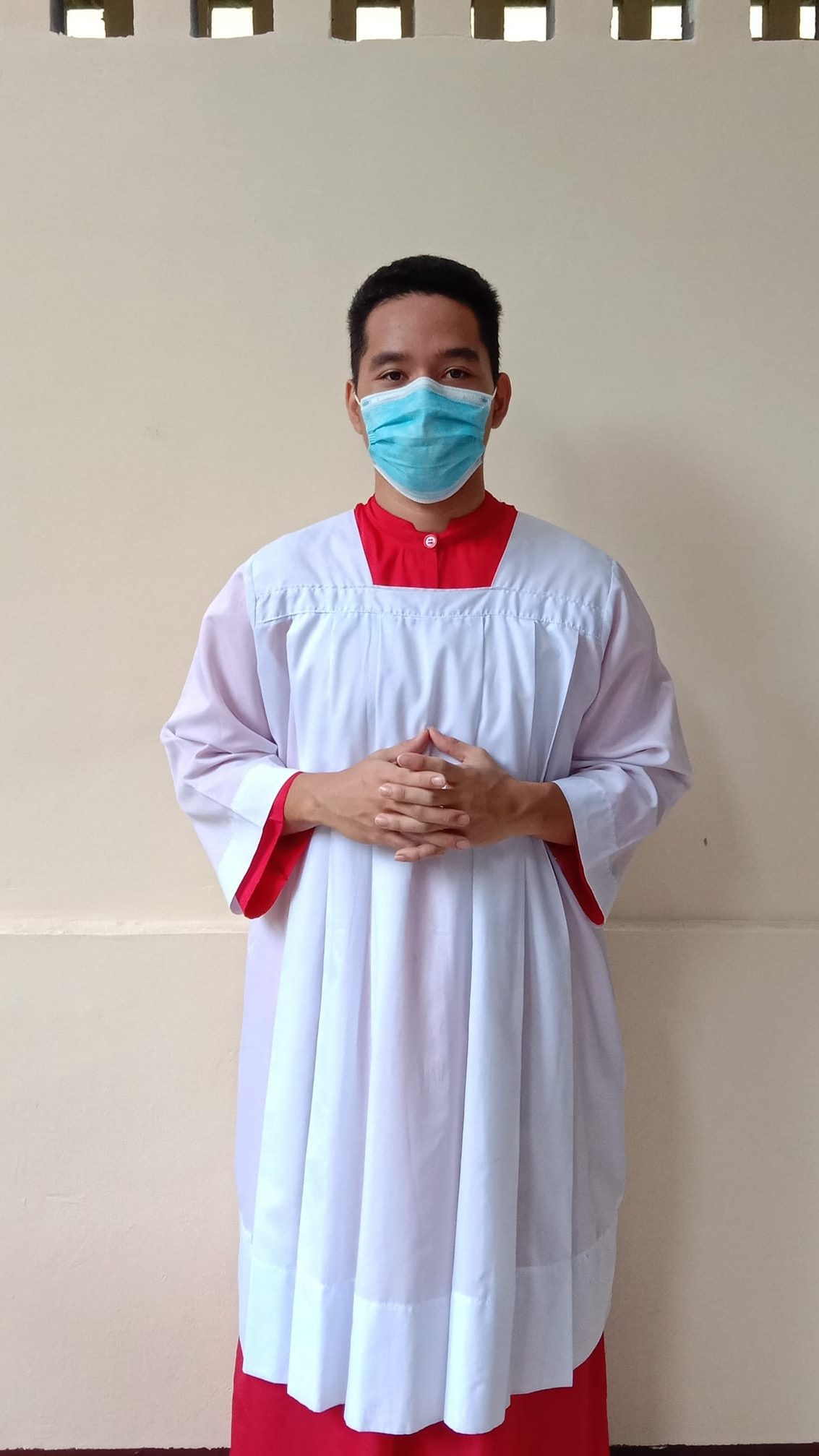
    Reflection by Charles James Somontan Antolan, a Local Youth-Mission Volunteer

    Before the Mission in our Parish of San Isidro Labrador in Balabagan which lasted from March to May 2021, I have been serving already as an Altar Server. In fact, I am entering the seminary this August and while I am still in our Parish, I was invited by the Mission Coordinator to join the mission as one of the Local Youth Mission Volunteers. Indeed, I accepted the invitation even though I did not have much knowledge on how the mission will go. What I only thought at that time was this year’s theme of the Philippine Church, “Year of the Missio Ad Gentes: Gifted to Give,” and that through this opportunity I would be able to share myself to others.

    However, behind my “yes” to the mission, I felt worried just like my co-local youth mission volunteers, on how I could be of help to the team. I know that I lack talents and knowledge. I was also anxious on how I would socialize with the Mission Team especially as they were composed of priests, lay-missionary, seminarians, deacons and other youth mission volunteers. I am aware that I am an introvert person. Though I am not shy but I tend to be more silent and a serious type of person. I thought that these traits in me will prevent me as I join the mission. Yet, when the missionaries arrived and stared the mission, what I expected never happened because each of them was very friendly. It was not difficult to meet and encounter each of them. And I felt at home with them.

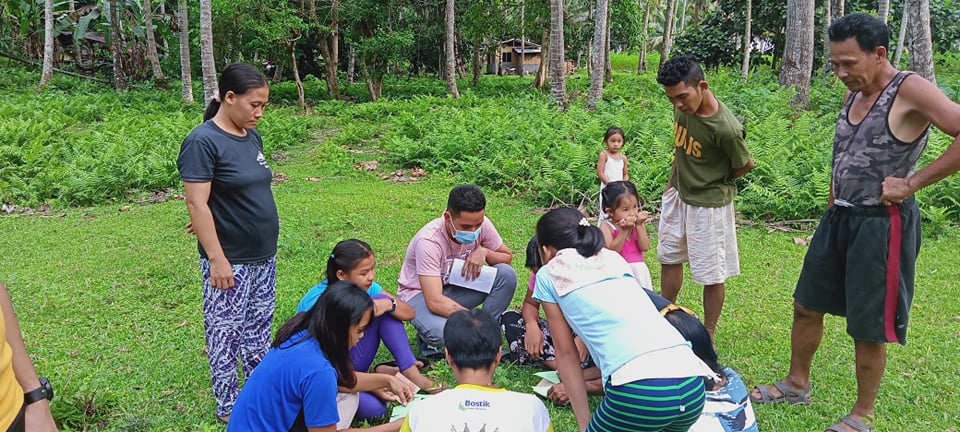
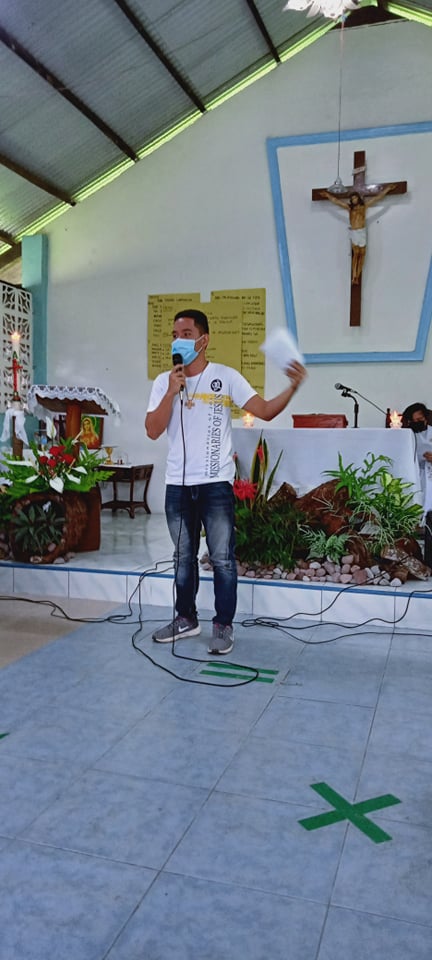
    It is true that the mission brought many changes in our parish particularly to myself. Undeniably, the people here in our parish are in thirst of the living Word of God especially those chapels and communities that can only celebrate the Holy Eucharist once a month. Through the mission, the people quenched and have been satisfied in their thirst to joyfully celebrate the Holy Mass and to listen to the regular formations and teachings. I myself witnessed this visible scenario especially during the team’s delivery of talks. The people would always pay attention. In fact, every time I would give a part of the talk, I would see in their eyes their willingness to learn and of their joy because of the presence of the mission.

    I am glad that through my participation in the mission, I was able to visit areas in our municipality which I have not been to before. I was able to encounter other people and made friends with other youth who were also serving their chapel like me. Through these encounters, I have witnessed and realized the beauty in their life that even in simplicity they remained grateful and joyful in sharing their graces.

    I remember, there was one time that four of us in the team (a priest, a deacon, myself and another co-youth volunteer) slept in the area because there will be a dawn novena-mass at 4 AM. It was a mountainous area and most of the people are farmers like their Patron Saint, San Isidro Labrador. We stayed overnight in their newly made waiting shed made of bamboo. The area was fresh and there was no presence of mosquitos around. However, what amazed me so much during our stay were their act of generosity and welcoming spirit. They didn’t just provide us food and shelter, they also spent their time socializing, eating with us, and most of all providing security by guarding the vicinity the whole night. These might be simple things but these meant a lot. For me, they showed concern, willingness to sacrifice and to show their love for visitors.

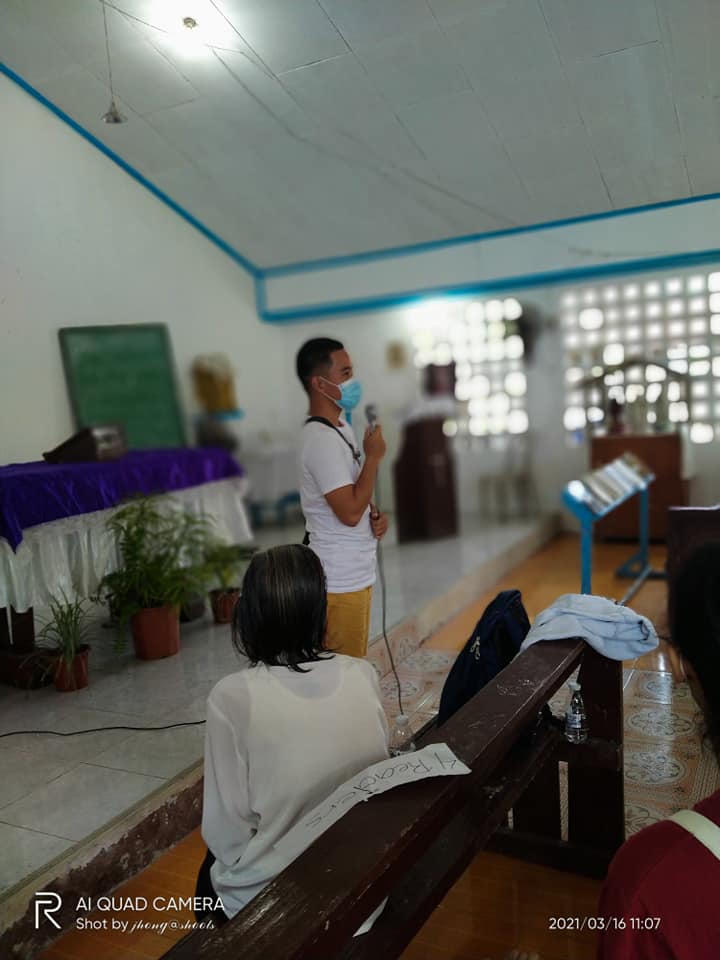
    The three-month mission helped me to be closer to God. The Redemptorist Itinerant Mission Team lived a prayerful life. Aside from celebrating the Holy Mass, we regularly have our morning prayer and the prayer I would never forget, the grace before meals. During our team study of the modules, I learned a lot especially about our Catholic Faith. Those learnings gave me other perspectives in looking at life. Like my co-youth volunteers, I have also proved to myself that I can really face and talk in front of a crowd, even among professionals, to give and deliver formation talks. Though there would be many times that I would perspire excessively while giving talks, but I have become happy about myself because at the end of the day, I was able to touch and impart knowledge to the people. And I believe, this is all for the greater glory of God.

    My journey in the mission brought me into these three general realizations.

    THE PRESENCE OF GOD IS TRULY ALIVE. Wherever I was, I always saw the image of Jesus to people who are kind-hearted, to the simple and poor, to the grateful and generous, to people who are always ready to sacrifice for the sake of others, to the witnessing, serving and prayerful individuals.

    GOD CREATED US WITH PURPOSE AND MISSION. The Redemptorist Missionaries were sent by God in our Parish in Balabagan to accompany us in celebrating our Golden Jubilee as a Parish, to preach the Gospel and to share their lives for the good of the people. Our people in the parish and in every area also helped for the success of this mission. Thus, each one of us has his or her own purpose and mission in life. What we need is to discover and to realize its fulfillment for the sake of others and for the glory of God.

    Third and lastly, I also came up with a personal realization.

    THE LORD HAS PREPARED ME FOR MY VOCATION IN LIFE. I realized that I have been called by the Lord to join the mission not just that I will be of help to the team, but also to prepare myself as I am about to enter the seminary for my priestly formation. I became more aware of myself. I have discovered some of my potentials and those that needs to be developed. Through the mission, I am reminded of the need of priests in our Parish and in the Prelature as a whole. This awareness gives me now the courage to continue. As I lived with the Mission Team for three months, I closely witnessed and experienced the life of priests. Their dedication and joy in serving inspires me to also aspire and become a priest like them, “puhon” (hopefully/in God’s time).

    I am much grateful that God gave me this privilege to experience the life of being on a mission. Thank you so much. Maayong Good Morning!